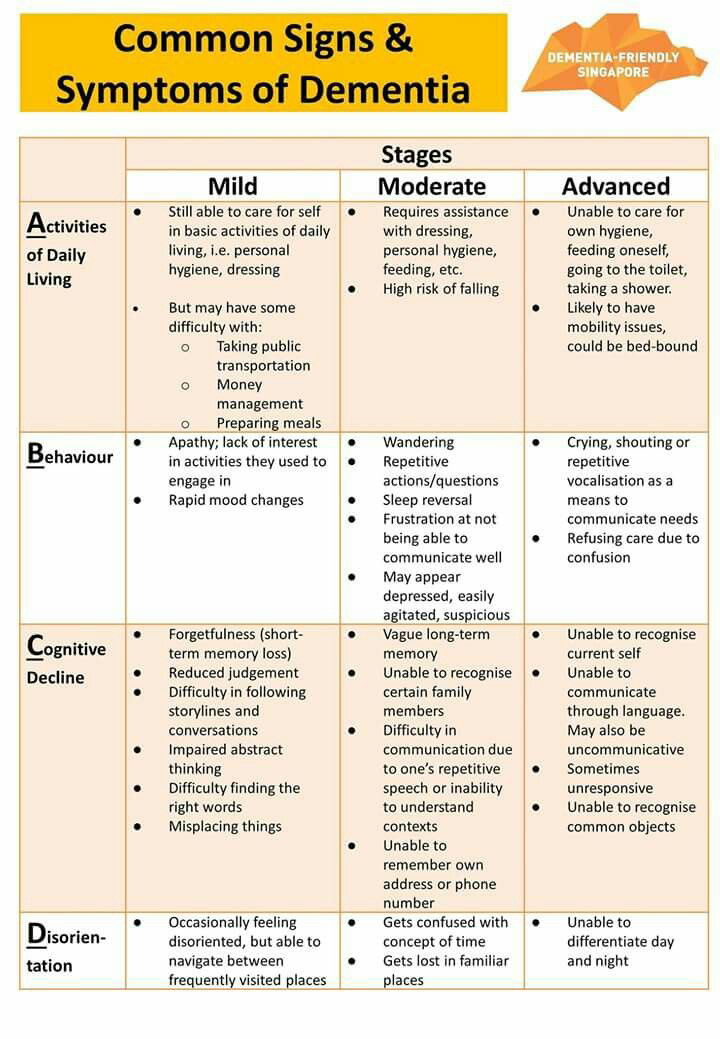
Early-Stage Dementia Unique Challenge with Reading
Individuals in the early stages of dementia often face unique challenges that can affect their willingness to participate in activities. Many still have some awareness of their cognitive changes. They notice when they can’t find the right word or when they get turned around on the way to the dining room, and this awareness can create feelings of insecurity or self‑consciousness. As a result, they may begin avoiding situations where others might notice these lapses—including your activity session.
This stage may also coincide with recent losses of independence. Perhaps they no longer live alone, or they now need help managing tasks they once handled confidently, such as finances or medication. These changes can be upsetting, and some individuals may become particularly sensitive to interactions that feel as though they are being treated like a child.
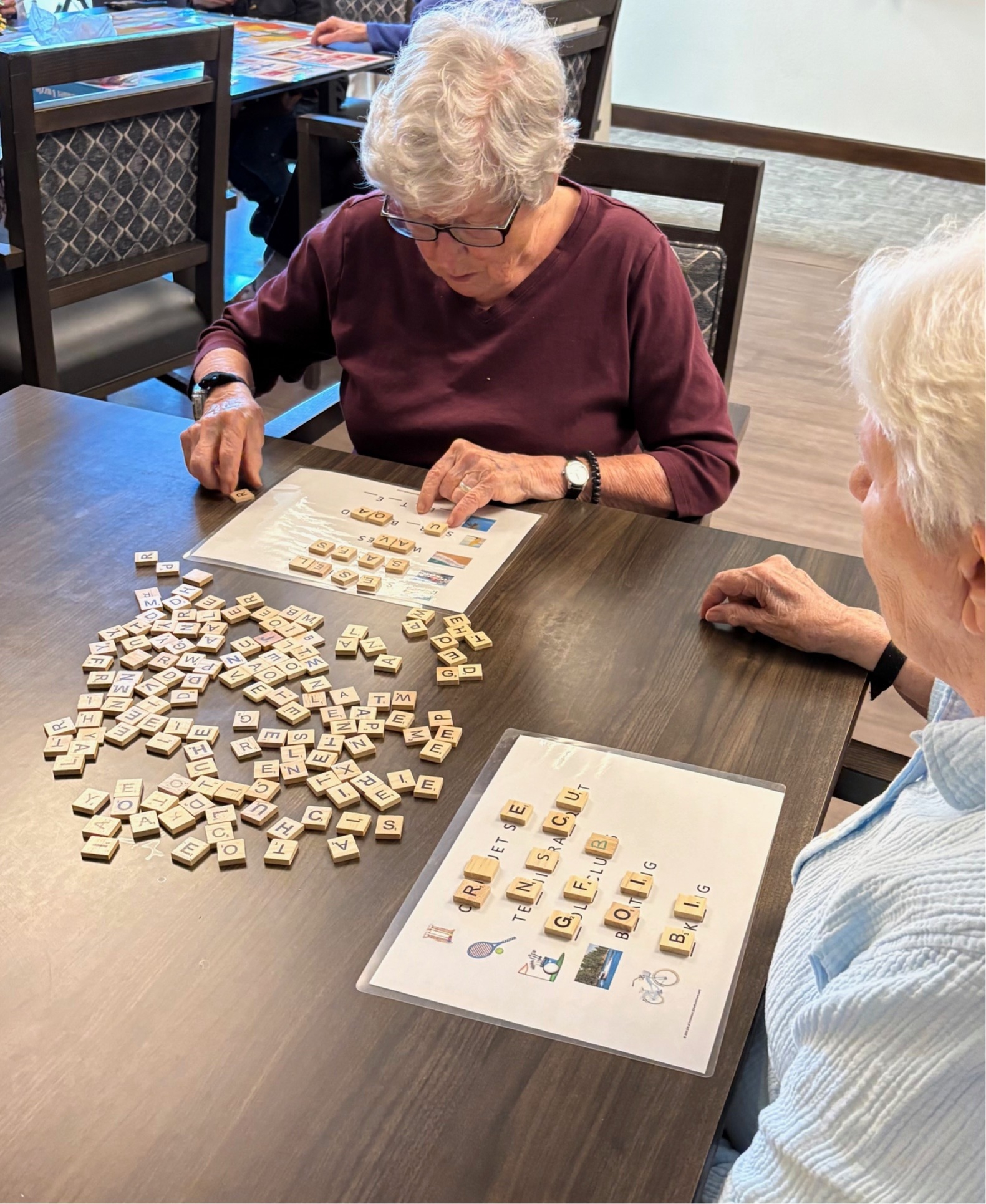
When you have a resident who has always loved reading but now seems to drift—wandering with a book in hand, watching television instead of engaging, or never actually opening the book—it can be a sign that reading has become difficult or overwhelming. Instead of drawing attention to the change, gently redirect them into a related, confidence‑preserving activity. One effective approach is to ask for their assistance. Presenting an activity as a meaningful task can restore a sense of purpose and competence. For example: “I’m working on a missing‑letter game, and I could really use your help. Would you help me search for a specific letter in this pile of tiles?” This kind of invitation feels collaborative rather than corrective, and it allows the participant to engage without feeling exposed or judged.
Additional Words & Letters Activities to try
- Scrabble Jr.
- Boggle
- Word Search
- Crossword Puzzles
- Word Scramble
- Word Lists with Letter Tiles
Dementia Levels