The Problem With 500–1000 Piece Puzzles in Memory Care
The Problem With 500–1000 Piece Puzzles in Memory Care
1. Too Many Pieces = Cognitive Overload
Large puzzles require:
2. Small Pieces Are Hard to See and Hard to Manipulate
Even without dementia, small puzzle pieces can be difficult for older adults.
Add visual‑spatial changes, depth‑perception challenges, or tremors—and the task becomes nearly impossible.
3. No Sense of Progress
Residents need to see success.
With a 500‑piece puzzle, progress is slow, unclear, and often invisible. This leads to:
Busy, detailed images (landscapes, collages, tiny patterns) require memory and visual discrimination that many Memory Care residents no longer have.
What Works Better: Puzzles Designed for Dementia
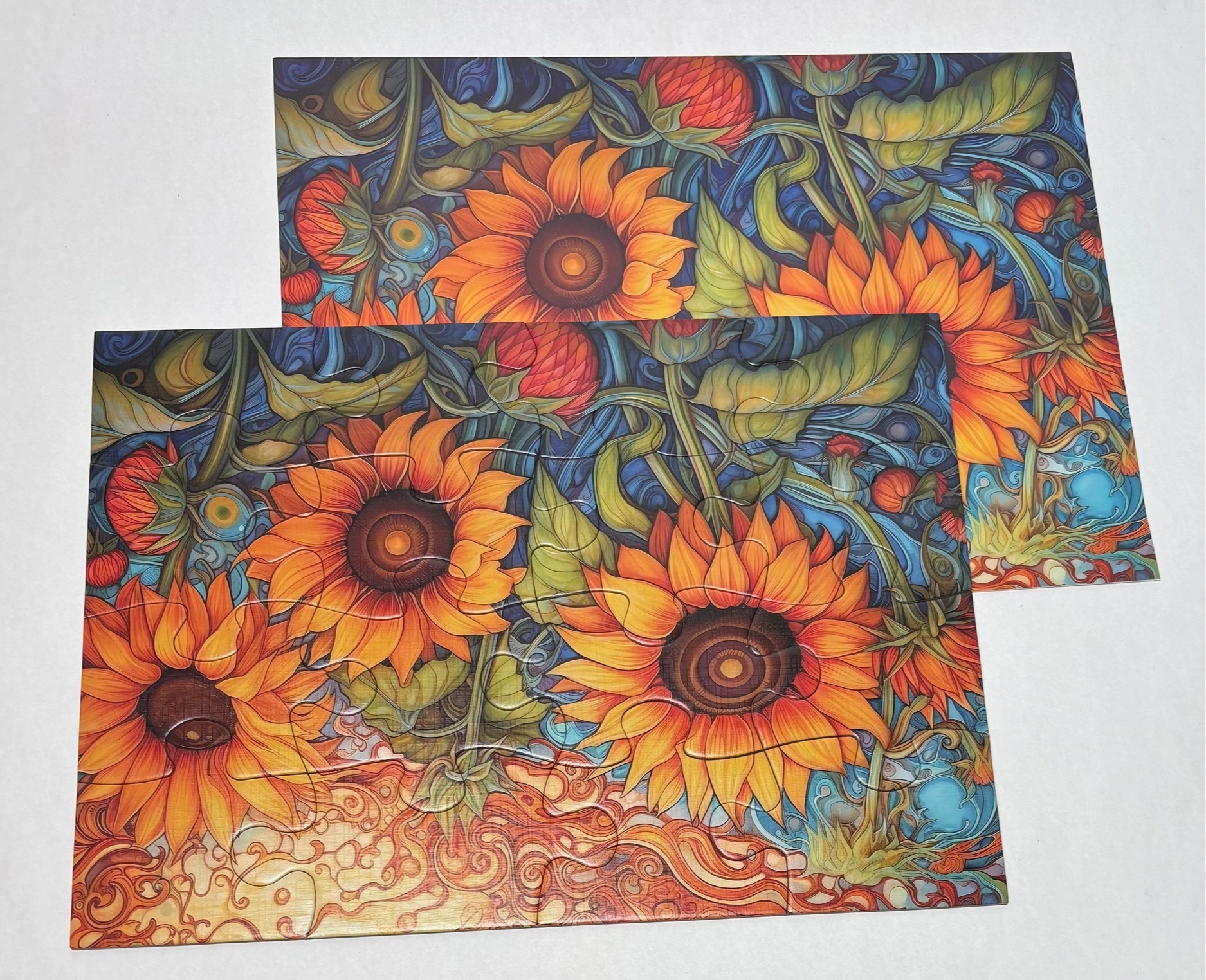
1. Larger Pieces
Large‑piece puzzles are easier to grasp, easier to see, and easier to place.
They support success, not struggle.
2. Fewer Pieces (2, 4, 12, or 24)
Fewer pieces means:
3. Clear, Complete Images
The best puzzles for Memory Care use:
Why the Right Puzzle Matters
When puzzles are matched to cognitive ability, residents experience:
The Bottom Line
A 500‑ or 1000‑piece puzzle may look inviting on a table, but for Memory Care residents, it’s simply too complex.
Choosing larger pieces, fewer pieces, and clear images transforms the experience from overwhelming to empowering.
Go Back 1. Too Many Pieces = Cognitive Overload
Large puzzles require:
- sustained attention
- visual scanning
- problem‑solving
- working memory
- fine‑motor coordination
2. Small Pieces Are Hard to See and Hard to Manipulate
Even without dementia, small puzzle pieces can be difficult for older adults.
Add visual‑spatial changes, depth‑perception challenges, or tremors—and the task becomes nearly impossible.
3. No Sense of Progress
Residents need to see success.
With a 500‑piece puzzle, progress is slow, unclear, and often invisible. This leads to:
- frustration
- walking away
- feeling “not good enough”
- refusal to try again
Busy, detailed images (landscapes, collages, tiny patterns) require memory and visual discrimination that many Memory Care residents no longer have.
1. Larger Pieces
Large‑piece puzzles are easier to grasp, easier to see, and easier to place.
They support success, not struggle.
2. Fewer Pieces (2, 4, 12, or 24)
Fewer pieces means:
- quick wins
- visible progress
- confidence
- willingness to stay engaged
3. Clear, Complete Images
The best puzzles for Memory Care use:
- bold, simple images
- familiar themes (animals, fruits, simple landscapes)
- high contrast
- uncluttered backgrounds
When puzzles are matched to cognitive ability, residents experience:
- success instead of frustration
- engagement instead of withdrawal
- confidence instead of confusion
- connection instead of isolation
A 500‑ or 1000‑piece puzzle may look inviting on a table, but for Memory Care residents, it’s simply too complex.
Choosing larger pieces, fewer pieces, and clear images transforms the experience from overwhelming to empowering.
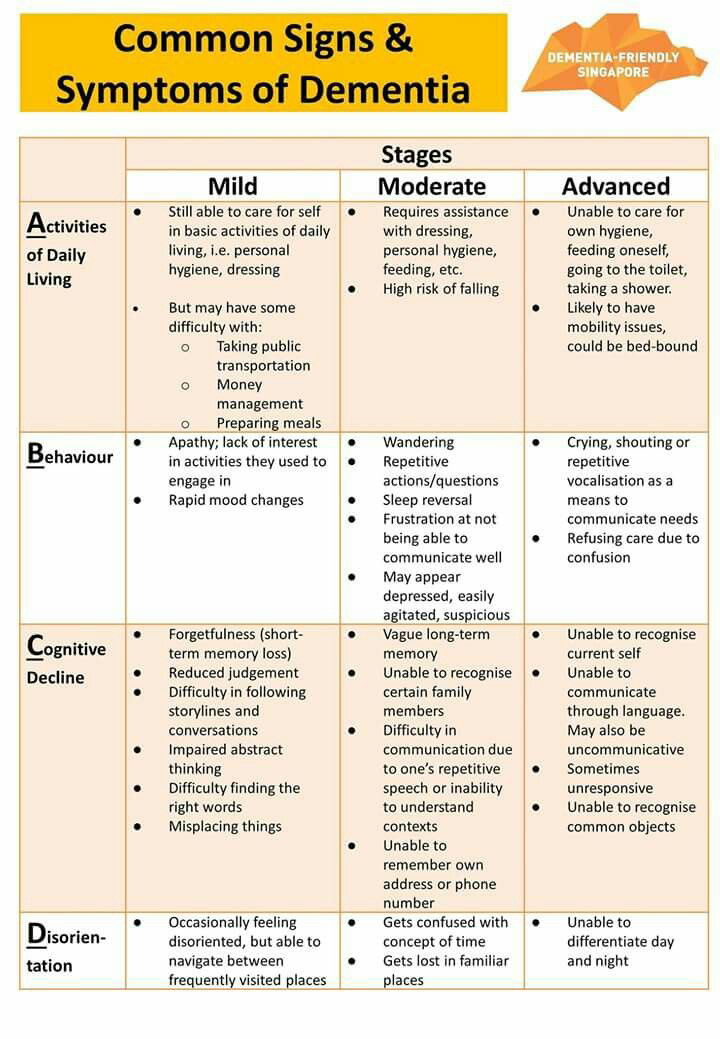
Dementia Levels