When a Cue Is All They Need: Supporting Middle Stage Dementia Residents Through Hands on Activities
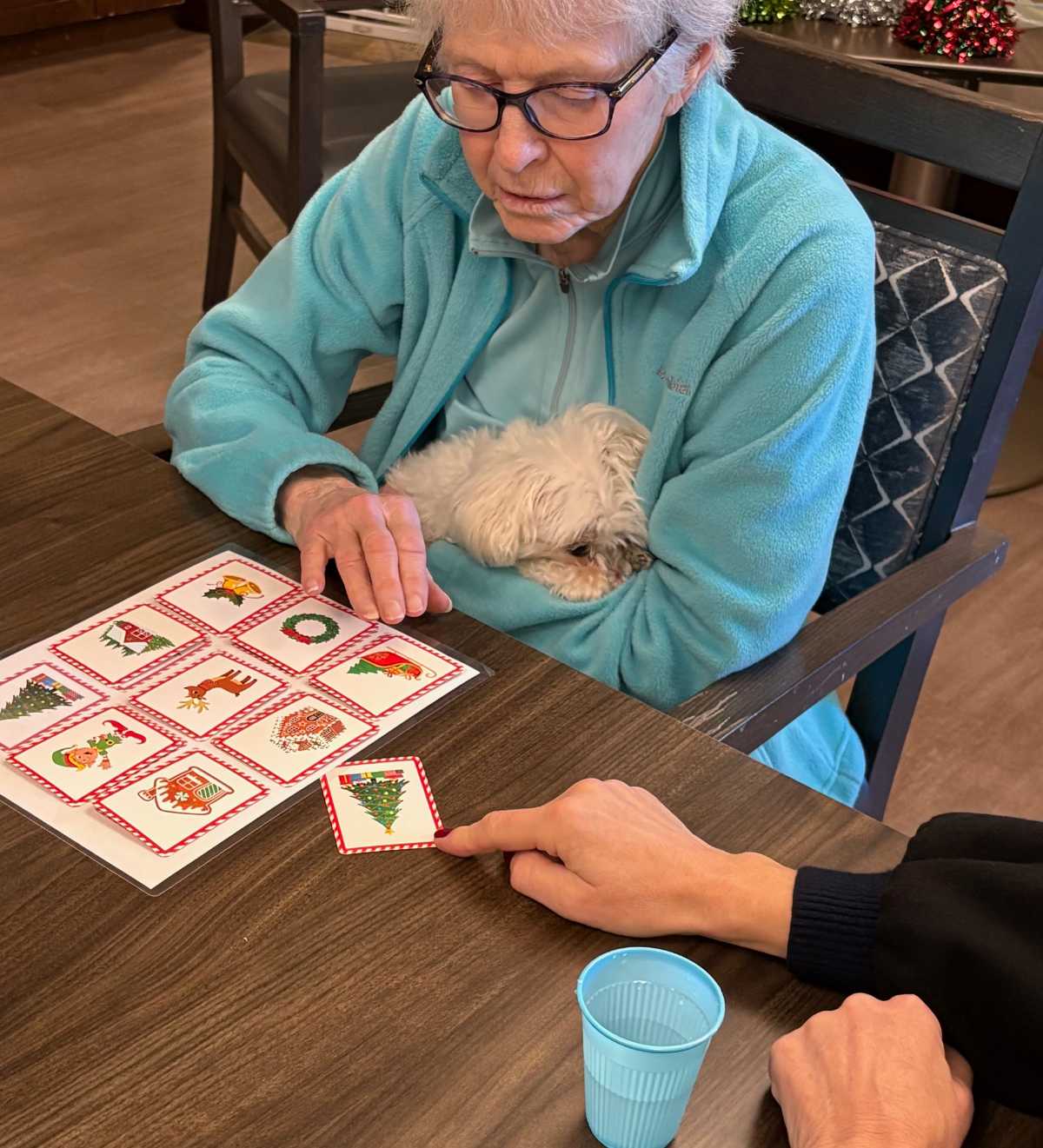
Middle‑stage dementia is a time when many residents still want to participate, still can participate, and still feel proud when they complete something meaningful — but they often need a little help getting started. Caregivers sometimes worry that if a resident hesitates or says “I don’t know what to do,” it means the activity is too hard. In reality, the resident may simply need a cue, a prompt, or a piece placed in their hand to unlock the next step.
This is where Montessori‑based dementia care shines.
Why Cues Work in Middle‑Stage Dementia
In middle‑stage dementia, the brain often struggles with initiation — the ability to start a task independently. But once the task is in motion, the resident’s long‑held motor memory takes over. That’s why placing a puzzle piece, peg, card, or object directly in their hand can be so powerful. The moment they feel the shape, weight, or texture, their brain recognizes the familiar action: Oh, I know what to do with this.
This isn’t “doing it for them.”
It’s removing the barrier that keeps them from doing it themselves.
The Power of Hand‑Under‑Hand and Object Cues
Montessori for Aging & Dementia emphasizes giving residents the least amount of help needed to be successful. For many middle‑stage residents, that help looks like:
What Caregivers Often Notice
Once the caregiver places the piece in the resident’s hand, something beautiful happens:
Why This Matters
Meaningful engagement isn’t about keeping residents busy. It’s about giving them opportunities to succeed, to feel capable, and to stay connected to the world around them. When caregivers use simple cues, they help residents:
Go Back This is where Montessori‑based dementia care shines.
Why Cues Work in Middle‑Stage Dementia
In middle‑stage dementia, the brain often struggles with initiation — the ability to start a task independently. But once the task is in motion, the resident’s long‑held motor memory takes over. That’s why placing a puzzle piece, peg, card, or object directly in their hand can be so powerful. The moment they feel the shape, weight, or texture, their brain recognizes the familiar action: Oh, I know what to do with this.
This isn’t “doing it for them.”
It’s removing the barrier that keeps them from doing it themselves.
The Power of Hand‑Under‑Hand and Object Cues
Montessori for Aging & Dementia emphasizes giving residents the least amount of help needed to be successful. For many middle‑stage residents, that help looks like:
- Placing one piece in their hand
Suddenly, they begin sorting, matching, stacking, or placing without further instruction. - Pointing or tapping the next step
A simple visual cue can reduce frustration and increase confidence. - Offering one item at a time
Too many choices can overwhelm; one clear option invites success. - Using hand‑under‑hand guidance only if needed
This keeps the resident in control while giving them a sense of direction.
What Caregivers Often Notice
Once the caregiver places the piece in the resident’s hand, something beautiful happens:
- Their posture straightens.
- Their expression softens.
- Their hands begin moving with purpose.
- They complete the task with confidence.
- They often smile, talk, or reminisce.
Why This Matters
Meaningful engagement isn’t about keeping residents busy. It’s about giving them opportunities to succeed, to feel capable, and to stay connected to the world around them. When caregivers use simple cues, they help residents:
- Reduce anxiety
- Stay focused
- Experience joy and accomplishment
- Maintain motor skills
- Strengthen identity and purpose
Dementia Levels